Top Window Protection in America: 2026 Comprehensive Editorial Guide
The vulnerability of the building envelope is most pronounced at its transparent points. In the United States, a nation characterized by diverse climatic extremes and shifting security landscapes, the window is no longer merely an aesthetic portal for light and ventilation; it has become a critical node in the broader strategy of structural defense. Protecting these apertures involves a complex interplay of physics, material science, and actuarial risk assessment. As we move through 2026, the demand for sophisticated glazing protection has moved from the periphery of high-security government installations into the mainstream of residential and commercial architecture.
Achieving a state of “protected” glass requires a departure from the binary thinking of the past. The engineering required to balance these defensive capabilities with optical clarity and thermal efficiency represents a significant segment of the American construction industry.
This editorial deep-dive examines the systemic layers that constitute the highest tier of window defense. By analyzing the evolution of laminated glass, the chemical properties of security films, and the mechanical robustness of shutter systems, we can begin to define what truly constitutes the gold standard for structural apertures. This is a definitive reference for those seeking to understand the nuanced mechanics of how we secure the most fragile part of our built environment.
Understanding “top window protection in America.”

To define the top window protection in America, one must first dismantle the oversimplified marketing jargon that permeates the home improvement sector. “Protection” is a variable, not a constant. For a homeowner in the Florida Keys, the term is synonymous with ASTM E1886/E1996 Large Missile Impact testing. And for a retail business owner in a dense urban center, it refers to Smash-and-Grab resistance. For a school administrator, it may involve UL 752 ballistic ratings.
The primary misunderstanding in the American market is the conflation of “shatter-resistant” with “burglar-proof.” No glass is truly impenetrable; given enough time, the right tools, and an absence of intervention. Therefore, the highest tier of protection is actually a system of integrated layers. These systems often combine a high-strength framing member, a multi-ply laminated glass unit, and a mechanical anchoring system that prevents the entire pane from being pushed out of its sash.
Oversimplification in this field leads to catastrophic failure. Relying on a 4-mil safety film to stop a determined intruder with a sledgehammer is a common error born of poor consumer education. True top-tier protection requires an understanding of “transfer of force”—how the energy of an impact is dissipated across the glazing and into the structure of the building itself without causing a total breach of the envelope.
Deep Contextual Background: The Evolution of Glazing Defense
The trajectory of window protection in the United States has been reactionary, driven by major weather events and shifting social dynamics. The advent of tempered glass provided a safety leap by ensuring that glass breaks into small, relatively harmless granules, but it did little to prevent a breach; once tempered glass breaks, the aperture is wide open.
The 1990s served as a watershed decade for American glazing standards. Following the devastation of Hurricane Andrew in 1992, building codes in the Southeast were radically overhauled. This birthed the modern “Impact Window” industry, moving away from temporary plywood coverings toward permanent, laminated glass solutions that could withstand the impact of a 9-pound 2×4 timber traveling at 50 feet per second.
Simultaneously, the rise in global terrorism and domestic civil unrest influenced the commercial sector to adopt technologies once reserved for military applications. Polycarbonate-glass clad laminates and “fragment retention films” became standard for government buildings after the 1995 Oklahoma City bombing. By 2026, these high-spec materials have filtered down to luxury residential markets, where homeowners now seek a “fortress” aesthetic that remains invisible to the naked eye.
Conceptual Frameworks and Mental Models
Navigating the landscape of high-end window protection requires specific mental models to evaluate efficacy versus cost.
-
The “Sacrificial Layer” Framework: This model assumes the first layer of defense will fail. The “protection” is found in the subsequent layers (e.g., the exterior pane of an IGU breaks, but the interior laminate remains intact).
-
The “Time-to-Breach” Metric: Instead of asking “Is this window unbreakable?”, professionals ask “How many minutes of sustained attack can this window withstand?” This shifts the focus from an impossible absolute to a measurable delay that allows for police or security response.
-
The “Energy Dissipation” Model: Effective protection isn’t about being “hard”; it’s about being “resilient.” A rigid material will shatter under a certain PSI, whereas a flexible, anchored laminate will stretch and absorb the energy, much like a trampoline.
-
The “Weakest Link” Constraint: A high-end ballistic glass pane is useless if it is installed in a standard vinyl frame. The frame and the hardware must be rated equal to or higher than the glass itself.
Key Categories of Window Protection Technology
The top window protection in America is generally bifurcated into “Active” systems (requiring human or mechanical deployment) and “Passive” systems (always in place).
1. Advanced Laminated Glass (Passive)
Consists of two or more panes of glass bonded together with a plastic interlayer, typically Polyvinyl Butyral (PVB) or SentryGlas (ionoplast).
-
Trade-off: High initial cost and significant weight, requiring heavy-duty hinges and frames.
2. Security Window Films (Passive)
A micro-layered polyester film is applied to the interior surface of the glass, anchored to the frame with a structural silicone bead.
-
Trade-off: More affordable and can be retrofitted, but lacks the ultimate strength of factory-laminated glass.
3. Polycarbonate Overlays (Passive/Active)
A clear, virtually unbreakable plastic shield (like Lexan) installed over existing windows.
-
Trade-off: Extreme impact resistance, but prone to scratching and UV yellowing over decades if not coated correctly.
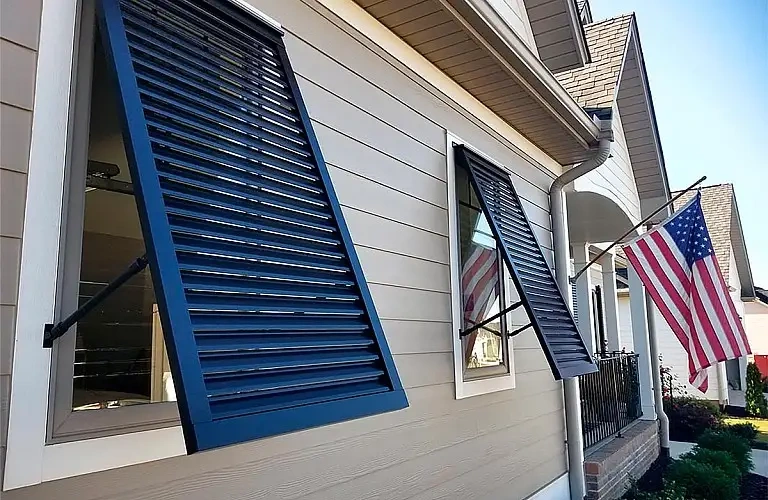
4. Roll-Down Hurricane/Security Shutters (Active)
Motorized or manual metal slats that descend to cover the entire window.
-
Trade-off: Absolute protection and excellent insulation, but they change the home’s appearance when deployed and require power/maintenance.
Comparison Table: Performance Benchmarks (2026 Standards)
| Technology | Primary Threat | Breached by Hammer? | Ballistic Capability | Life Expectancy |
| Laminated (PVB) | Hurricanes | No (maintains seal) | Minimal | 25+ Years |
| SentryGlas | High Wind/Blast | No (very rigid) | Low (multi-ply) | 30+ Years |
| 12-Mil Security Film | Smash & Grab | Only after 30+ hits | None | 10–15 Years |
| Glass-Clad Poly | Ballistics | No | High (UL 752) | 15–20 Years |
| Aluminum Shutters | Storm/Debris | No | Varies (High) | 20+ Years |
Detailed Real-World Scenarios

A: The High-End Retail Boutique in a High-Crime Urban Center
-
Threat: Nighttime “smash-and-grab” looting using heavy tools.
-
Constraint: The storefront must remain visible and inviting to customers during the day.
-
Solution: A 14-mil security film with a 4-sided structural anchor system.
-
Failure Mode: If the film is not anchored to the frame, the entire pane of glass—film and all—will simply fall out of the frame once the edges are broken.
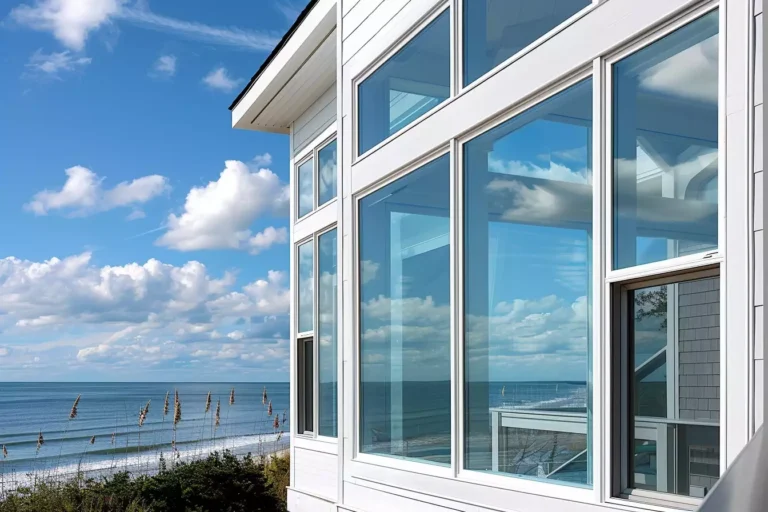
B: The Modern Coastal Estate (South Carolina)
-
Threat: Category 5 hurricane winds and flying projectiles.
-
Constraint: Breathtaking ocean views must be preserved; no “clunky” shutters.
-
Solution: Custom-engineered SentryGlas laminates with reinforced aluminum frames.
-
Second-Order Effect: The thick laminate significantly reduces exterior noise and blocks 99% of UV rays, preventing the interior art and flooring from fading.
C: The Suburban “Panic Room” Conversion
-
Threat: Potential home invasion with small-arms fire.
-
Constraint: The window must look like a normal residential window from the street.
-
Solution: Level 3 UL 752 Ballistic glass installed in a steel-reinforced frame.
-
Decision Point: The homeowner must decide between a “No-Spall” glass (where no glass fragments fly into the room upon impact) or a cheaper “Spall” version. They choose No-Spall for safety.
Planning, Cost, and Resource Dynamics
The economic reality of the top window protection in America is that it is often subsidized by insurance premiums and property value appreciation. However, the upfront capital expenditure is substantial.
Direct Costs
Prices in 2026 for high-end protection vary by region, but general ranges exist:
-
Laminated Impact Windows: $65–$110 per square foot.
-
Security Film (Professional Grade): $15–$28 per square foot.
-
Ballistic Glazing: $150–$400 per square foot (depending on rating).
Indirect Costs and Opportunity Costs
Installing heavy-duty protection often necessitates structural modifications. If the building’s wall studs are rotted or insufficient, the “top” window protection will fail because the wall itself will give way before the window does.
Cost-Benefit Variability Table
| Tier | Investment Level | Primary ROI | Insurance Discount |
| Tier 1 (Film) | Low ($) | Theft Prevention | 0%–5% |
| Tier 2 (Laminated) | Moderate ($$) | Storm + Security + Energy | 10%–20% |
| Tier 3 (Ballistic) | High ($$$) | Life Safety | Varies (High) |
Tools, Strategies, and Support Systems
The successful implementation of window defense relies on a sophisticated ecosystem of diagnostics and installation protocols.
-
G-Force Simulation Software: Used by engineers to predict how a specific glass makeup will react to blast pressures.
-
Edge-to-Edge Bonding: A strategy where the film or laminate is chemically welded to the frame, not just “laid on” the glass.
-
Third-Party Testing (Intertek/UL): Never trust a brand that hasn’t been independently validated by an American National Standards Institute (ANSI) accredited lab.
-
Desiccant Spacers: Crucial for multi-pane protective units to prevent internal fogging over time.
-
Thermal Stress Analysis: High-security films can increase the heat absorption of glass, potentially leading to thermal cracks if the glass isn’t heat-strengthened first.
Risk Landscape and Failure Modes
The primary risk in the pursuit of the top window protection in America is “Systemic Imbalance.” This occurs when one component—the glass—is upgraded without a corresponding upgrade to the locks, frames, or walls.
-
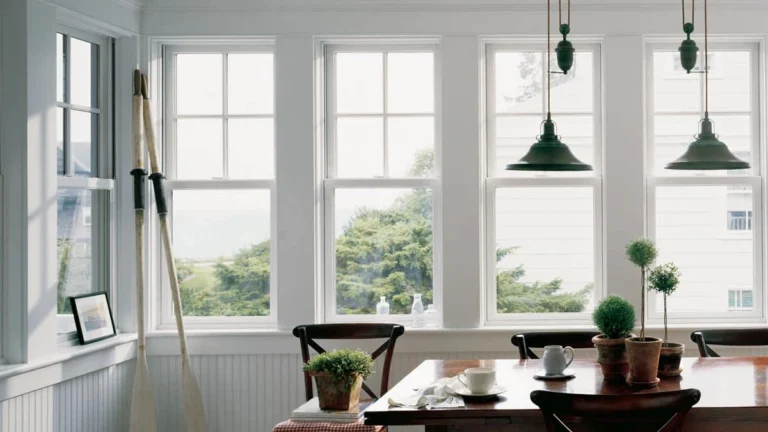
The “Bar-in-the-Middle” Failure: In double-hung windows, the meeting rail (where the two sashes lock) is often the weakest point. An intruder doesn’t need to break the glass if they can simply pry the two sashes apart.
-
Hydraulic Pressure Risks: During a hurricane, if one window is breached, the internal pressure of the house rises instantly. If the other windows are “too strong” and don’t allow that pressure to escape, the roof can be literally lifted off the structure.
-
Egress Risks: A window that is “unbreakable” can become a death trap during a house fire. Any Tier 3 protection system must be balanced with a clear fire escape plan and, in some cases, quick-release internal mechanisms.
Governance, Maintenance, and Long-Term Adaptation
The protection of a building is a dynamic state, not a static achievement. It requires a “governance” mindset—regularly scheduled audits of the hardware and materials.
The Maintenance Checklist
-
Glazing Beads: Inspect annually for cracks or shrinking in the caulking that holds the glass in the frame.
-
Hinge Torque: Heavy protective glass puts immense strain on hinges. Check for “sagging” every six months.
-
Film Delamination: Look for small bubbles or “silvering” at the edges of security films, which indicates a bond failure.
Long-Term Adaptation
As materials age, their protective qualities can degrade. Polycarbonates may become brittle after 15 years of intense UV exposure. A “lifecycle review” should occur every decade to ensure the technology still meets the current threat landscape.
Measurement, Tracking, and Evaluation
How does an organization or homeowner evaluate the performance of their protection?
-
Quantitative: Air infiltration rates (measured in cfm/sq ft). If the air leak rate increases, the seals of your protective units are failing.
-
Qualitative: “Peace of Mind” audits. Does the staff or family feel safe? Does the reduction in outside noise meet the expected decibel drop?
-
Documentation: Keep a “Security Log” detailing the date of installation, the specific SKU of the film or glass, and the contact information for the certified installer. This is vital for insurance claims and resale value.
Common Misconceptions and Oversimplifications
-
Myth: “Hurricane-proof” glass is the same as “Bullet-proof” glass.
-
Correction: Hurricane glass is designed to stop large, slow objects (debris); ballistic glass is designed to stop small, incredibly fast objects (lead). They use different interlayers and thicknesses.
-
-
Myth: Any window film will stop a burglar.
-
Correction: Standard “solar film” (for heat) is paper-thin and offers zero structural protection. You need at least 8-mil (0.008 inches) for basic security.
-
-
Myth: You don’t need protection if you have an alarm.
-
Correction: An alarm tells you someone is inside. Window protection keeps them outside. The two must work in tandem.
-
-
Myth: Tempered glass is the strongest option.
-
Correction: Tempered glass is strong against blunt force, but it is extremely vulnerable to “point-loading” (a ceramic spark plug fragment or a center punch will shatter it instantly).
-
Ethical and Practical Considerations
In the quest for the top window protection in America, there is an ethical dimension regarding “defensive architecture.” Making a home or business look like a prison can have negative psychological effects on a neighborhood’s social fabric. The goal of modern protection is “discretion.” The highest-performing systems are those that provide extreme security while maintaining the aesthetic transparency that defines open, democratic societies.
Furthermore, there is a practical environmental consideration. High-performance protective glass is incredibly heavy, leading to a larger carbon footprint in shipping and installation. However, the lifespan of these units (often 30+ years) far exceeds that of cheap vinyl windows, making them a more sustainable “one-and-done” investment in the long term.

Conclusion
The pursuit of the top window protection in America is a journey through the intersection of safety and design. Whether it is the chemical bond of a security laminate or the mechanical strength of a reinforced frame, these systems serve as the silent sentinels of our homes and businesses. True protection requires patience in planning, honesty in assessing risk, and a commitment to maintaining the integrity of the system over the decades. In an unpredictable world, the window remains our most vulnerable point, but with modern engineering, it can also become our most resilient.