The Architect’s Compendium of Secondary Glazing: Managing Structural and Thermal Integrity
The preservation of architectural integrity often exists in direct tension with the modern demand for thermal efficiency. The implementation of secondary glazing, realized through a sophisticated understanding of the building envelope, offers a high-performance middle ground. Unlike replacement, which involves the destructive removal of original casing and trim, secondary glazing operates as an additive system that respects the existing thermal mass while drastically reducing air infiltration.
Developing a robust strategy for secondary glazing requires moving beyond the “seasonal DIY” mindset. It demands an acute understanding of fluid dynamics, material expansion coefficients, and the chemical properties of various glazing media. A well-conceived plan does not merely “block a draft”; it creates a managed micro-environment—a stagnant air buffer—that functions as a thermal break. When executed with precision, these systems can rival or exceed the performance of modern replacement windows, provided the installer accounts for the specific atmospheric conditions of the site and the peculiar geometries of the original openings.
The complexity of these projects lies in the details of the assembly: the selection of rot-resistant timber or high-grade extruded aluminum, the management of weep holes to prevent interstitial condensation, and the calibration of the air gap. This article serves as a comprehensive technical reference for the selection and implementation of these systems. It explores the intersection of traditional joinery and modern building science, offering a roadmap for those seeking to maximize thermal barriers without sacrificing the soul of a structure.
Understanding “common storm window mounting mistakes.”

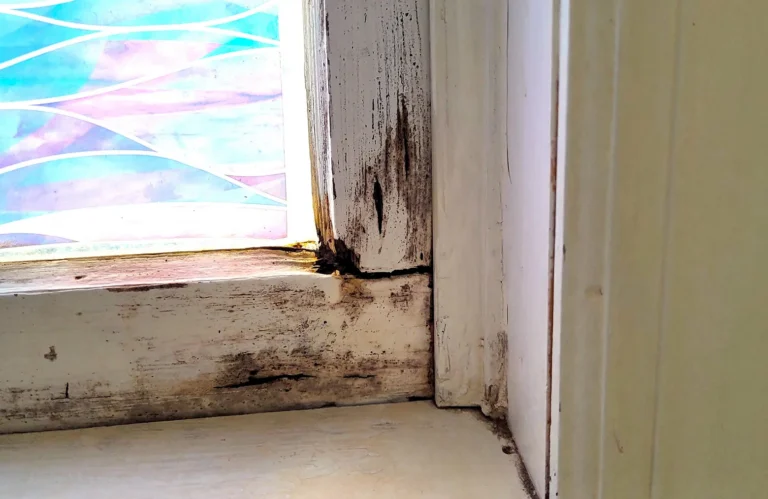
To approach common storm window mounting mistakes as a technical subject is to recognize that a storm window is not a standalone product, but a component of a layered wall system. The primary sash and the secondary glazing must function in tandem, yet they often fail because installers treat them as independent units. One of the most pervasive errors is the pursuit of a hermetic seal. In a laboratory, a 100% airtight window is a success; in a 19th-century timber-frame home, it is often a precursor to structural rot. If the exterior storm is tighter than the interior primary sash, moisture vapor from the living space migrates into the interstitial gap, finds no egress, and condenses against the cold outer glass.
Multi-perspective analysis suggests that mounting failures are rarely the result of a single error, but rather a compounding series of oversights regarding material compatibility and fluid dynamics. A common misunderstanding is that “caulking everything” is the best way to ensure efficiency. This oversimplification ignores the “weep hole” logic. Secondary glazing must be allowed to “breathe” toward the exterior to equalize vapor pressure. When these drainage paths are obstructed, the trapped hydraulic pressure can actually force water into the sill rather than away from it.
Furthermore, mounting mistakes frequently stem from a failure to account for the “out-of-square” reality of aged structures. A storm window frame that is forced into a skewed opening creates internal stresses that eventually lead to seal failure, glass cracking, or the binding of operable sashes. True technical mastery in mounting involves the use of shims and low-modulus sealants that accommodate the building’s natural movement without sacrificing the thermal break.
Deep Contextual Background
The concept of the “double window” dates back to northern Europe in the 17th century, where secondary sashes were often temporarily tacked onto the exterior of the house during winter months. These early iterations were utilitarian, often obscuring the primary window’s aesthetics. By the Victorian era, the “triple track” aluminum system emerged—a marvel of post-war industrialization that prioritized convenience over thermal physics.
Historically, mounting was a seasonal ritual. Windows were hung on hangers and secured with turn-buttons, a system that provided a naturally vented air gap. The transition to “permanent” mounting in the mid-20th century introduced the modern era of failures. As we moved toward permanent caulking and mechanical fastening, we lost the inherent safety valve of the loosely fitted sash. Modern high-performance systems attempt to recapture this safety through engineered weep systems and thermally broken frames, yet the baseline of common storm window mounting mistakes remains rooted in this historical shift from temporary, breathable barriers to permanent, unyielding seals.
Conceptual Frameworks and Mental Models
To navigate the mounting process, one must employ specific mental models:
1. The Vapor Pressure Gradient
Moisture moves from high-pressure areas (warm, humid interiors) to low-pressure areas (cold, dry exteriors). The mounting strategy must respect this directionality. The inner window should always be tighter than the outer window.
2. The Stagnant Air Buffer
The efficiency of a storm window is not found in the glass itself, but in the air it captures. If the mounting allows air to circulate freely from the outside into the gap, the R-value of the assembly collapses. The goal is “stagnant” air, not “vacuum-sealed” air.
3. The Sacrifice Zone
Think of the storm window as a sacrificial shield. Its mounting should be robust enough to withstand wind loads but reversible enough to allow for the maintenance of the primary sash. Permanent mounting that prevents access for repainting the primary window is a failure of long-term stewardship.
Key Categories or Variations
Mounting strategies generally fall into four technical categories, each with distinct trade-offs:
| Mounting Type | Substrate | Air Sealing | Reversibility | Failure Risk |
| Blind-Stop Mount | Aluminum/Wood | High | Medium | Hidden sill rot |
| Overlap/Face Mount | Aluminum | Medium | High | Aesthetic intrusion |
| Magnetic (Interior) | Acrylic/Steel | Superior | High | UV degradation |
| Compression (Interior) | Wood/Foam | High | Very High | Gasket fatigue |
Decision Logic for Mounting
Selecting a typology requires an audit of the window’s “rebate” or “casing” depth. If the casing is shallow, an overlap mount is often required. However, the overlap mount is where most common storm window mounting mistakes occur, specifically the failure to provide a capillary break between the storm frame and the primary trim, which allows water to be sucked behind the frame via surface tension.
Detailed Real-World Scenarios
Scenario A: The Masonry Opening
In a stone or brick building, installers often mount storm windows directly to the masonry.
-
The Mistake: Using standard steel fasteners and no thermal break.
-
The Result: Galvanic corrosion of the fasteners and a “cold bridge” that causes condensation at the frame’s edge.
-
The Correction: Use stainless steel fasteners and a non-conductive shim (like high-density plastic) to isolate the frame from the masonry.
Scenario B: The Sloped Sill
A common error is mounting the storm window flush against a sloped sill without a transition.
-
The Mistake: Obstructing the natural drainage of the primary sill.
-
The Result: Water pools at the base of the storm, eventually finding a way under the primary sash.
-
The Correction: The storm window must be mounted with a “sill expander” or a dedicated gap that aligns with the primary window’s drainage logic.
Planning, Cost, and Resource Dynamics
The financial cost of mounting errors is rarely felt in the initial installation but compounds through “Avoided Maintenance Costs.” A poorly mounted $300 storm window can cause $3,000 worth of damage to a historic sash in less than a decade.
Resource Allocation Table
| Resource | Cost Range | Variability Factors |
| High-Performance Sealant | $15 – $30 / tube | Silicone vs. Polyurethane vs. Hybrid |
| Stainless Fasteners | $0.50 – $2.00 / unit | Grade (304 vs 316), length requirements |
| EPDM Gasketing | $2.00 – $5.00 / ft | Thickness and compression rating |
| Professional Labor | $100 – $300 / unit | Site accessibility and substrate complexity |
Tools, Strategies, and Technical Support Systems
Avoiding common storm window mounting mistakes requires a specific technical kit:
-
Digital Inclinometer: To ensure the storm window frame is plumb even when the casing is not.
-
Low-Modulus Hybrid Sealant: Unlike standard silicone, hybrid sealants offer superior adhesion to varied substrates while allowing for thermal expansion.
-
Shim Packs (Non-Organic): Using cedar shims in a moisture-prone area is a mistake; use composite shims to avoid rot.
-
Borescope Camera: To inspect the gap between the windows post-installation for any signs of “bridging” or debris.
-
Suction Lifters: To ensure the glass remains clean and the frame is handled without torquing the joints during mounting.
Risk Landscape and Failure Modes
1. The Hydraulic Trap
When the top and sides of a storm window are sealed perfectly, but the bottom is also sealed (by accident or ignorance), the system becomes a hydraulic trap. Wind-driven rain enters through microscopic gaps at the top and pools at the bottom with no exit.
2. Fastener Over-Torquing
In aluminum systems, over-tightening mounting screws can distort the frame. This distortion prevents the sliding sashes from sealing correctly, negating the energy-efficiency benefits.
3. Thermal Stress Fractures
If a mounting is too rigid, the glass cannot expand during the heat of the day. In southern exposures, this often results in spontaneous cracking of the glazing, particularly if using tempered glass with edge-pinching.
Governance, Maintenance, and Adaptation
A mounted storm window is a dynamic system. Governance requires a “monitoring cycle” rather than a “set and forget” mentality.
-
Post-Season Review: Every spring, inspect the interior of the glass for “fogging.” Persistent fogging indicates that the interior sash is too loose or the storm window’s venting is blocked.
-
Sealant Integrity Audit: Every five years, check the perimeter sealant for “adhesive failure” (detaching from the substrate) or “cohesive failure” (splitting down the middle).
-
Weep Hole Maintenance: Annually, use a small wire or compressed air to ensure weep holes are not clogged with dust or insect nests.
Measurement, Tracking, and Evaluation
How does one quantify the success of a mounting?
-
Infrared Thermography: On a cold day, scan the perimeter of the mounted storm. A “blue” (cold) line indicates a convective leak in the mounting.
-
Hygrometer Data: Placing a small wireless hygrometer in the air gap for 48 hours can provide a “Vapor Pressure Profile.” If the humidity in the gap remains higher than the outdoor humidity for long periods, the mounting is failing to vent.
-
Sound Decibel Testing: For urban applications, the mounting’s success is often measured by “acoustic attenuation.” A 10-decibel drop indicates an effective perimeter seal.
Misconceptions and Technical Oversimplifications
-
Misconception: “Double-sided tape is a permanent mounting solution.” Correction: UV radiation and temperature swings degrade adhesives rapidly; mechanical fasteners are required for long-term safety.
-
Misconception: “Storm windows make the primary window maintenance-free.” Correction: They protect the window, but they also hide it. You must still remove them periodically to inspect the primary sash.
-
Misconception: “More caulk equals more warmth.” Correction: Excess caulk often blocks necessary drainage and makes future repairs destructive.
Ethical and Practical Considerations
In the world of historic preservation, mounting is an ethical choice. The concept of “Reversibility” is paramount. This often means avoiding through-hole fasteners in original mahogany or oak casings, opting instead for compression-fit or magnetic systems that leave no trace.

Conclusion: Synthesis of Building Performance
The mastery of secondary glazing installation is found in the management of the invisible: air pressure, vapor movement, and thermal expansion. Avoiding common storm window mounting mistakes is not merely about following a manual; it is about developing a sensitivity to the building’s environmental context.
The most successful installations are those where the installer thinks like a glazier, acts like a carpenter, and understands like a physicist.