Best Hurricane Window United States: A Definitive Engineering & Selection Guide
As tropical systems grow in both intensity and frequency, the “building envelope”—the physical separator between the conditioned interior and the chaotic exterior—has become the primary focus of modern civil engineering and residential design. To identify the “best” hurricane-resistant glazing, one must look beyond the marketing gloss of “impact-proof” glass. True resilience is a product of the entire assembly: the chemical composition of the interlayer, the structural rigidity of the frame, and the precision of the anchoring system. A failure in any one of these elements can lead to a catastrophic breach of the home’s pressurized seal, a scenario that often results in the structural lifting of the roof and the total loss of the property.
This article serves as a comprehensive reference for those seeking topical mastery of the U.S. hurricane window market. We will dissect the technical standards established by the American Society for Testing and Materials (ASTM), evaluate the regional nuances of “High Velocity Hurricane Zones” (HVHZ), and analyze the systemic trade-offs between different frame materials and glass packages. By moving beyond surface-level summaries, we provide a definitive framework for evaluating long-term safety and structural integrity in the face of rising environmental volatility.
Best hurricane window in the United States

The search for the best hurricane window united states provides is often hampered by the misunderstanding that “impact resistant” and “hurricane proof” are interchangeable terms. In a rigorous editorial context, the “best” window is one that satisfies the stringent Miami-Dade Notice of Acceptance (NOA) or Florida Product Approval, which are the gold standards for the entire nation. These certifications ensure that the window has passed the “Large Missile Impact” test—usually involving a $9$-pound $2 \times 4$ stud fired at $50$ feet per second—followed by thousands of cycles of positive and negative pressure to simulate the “pumping” effect of high winds.
The most advanced units utilize a “SentryGlas” (ionoplast) interlayer, which is five times tougher and up to $100$ times stiffer than standard polyvinyl butyral (PVB). Oversimplification in this sector often ignores the “Design Pressure” (DP) rating.
Deep Contextual Background
The American hurricane window industry was born out of tragedy. The landfall of Hurricane Andrew in $1992$ served as a watershed moment for building codes. Investigations revealed that the majority of structural failures occurred because windows and doors blew in, allowing the home to pressurize like a balloon. This internal pressure, combined with the external lift on the roof, essentially pulled houses apart from the inside out.
The last three decades have seen a move away from thick, heavy steel frames toward thermally broken aluminum and reinforced vinyl, which offer better energy efficiency while maintaining the necessary “stiffness” to pass the cyclic pressure tests.
Conceptual Frameworks and Mental Models
To evaluate hurricane windows like a structural engineer, consider these frameworks:
-
The “Intact Envelope” Principle: This model posits that the window’s primary job is not to stay pretty, but to stay sealed. If the glass cracks but stays in the frame, the window has succeeded. If a single hole the size of a golf ball appears, the home’s internal pressure could rise enough to fail the roof.
-
The Tolerance Stack-Up: This model recognizes that a great window in a weak wall is a failure.
-
The Energy-Resilience Interlock: A mental model for the modern era where hurricane protection must be achieved without a “thermal bridge.” In the U.S., the best windows use “warm-edge” spacers and Low-E coatings to ensure that the window that stops a hurricane also stops the $100$°F Florida sun.
Key Categories and Variations
Market variations are primarily defined by the frame material and the “cycling” capacity of the glass.
The choice of interlayer is critical. While PVB is standard, the “best” architectural windows in the United States often opt for Ionoplast (SentryGlas) for its superior clarity and edge stability, particularly in coastal environments where humidity can cause standard PVB interlayers to “delaminate” or cloud over time.
Detailed Real-World Scenarios
Scenario 1: The Beachfront Contemporary
A glass-heavy home directly on the Gulf Coast.
-
Constraint: Constant salt spray and $160$ mph wind zone.
-
Failure Mode: Corrosion of standard hardware; glass “pull-out” from frames during suction cycles.
-
Management: Use of stainless-steel hardware and a “wet-glazed” system where the glass is chemically bonded to the frame with structural silicone.
Scenario 2: The Urban High-Rise
A 20th-floor condo in Miami or Houston.
-
Constraint: Extreme wind loads at height; difficult to replace if damaged.
-
Failure Mode: Frame “deflection” (bending) that allows water to spray through the gaps.
-
Management: Heavy-gauge aluminum frames with a high DP rating ($80$+) to minimize flex under pressure.
Planning, Cost, and Resource Dynamics
The “all-in” cost of a hurricane window is significantly higher than a standard replacement, often by a factor of three.
Deploying the best hurricane window united states provides requires more than a drill; it requires a structural survey.
-
Fastener Embedment Depth: Using $3$-inch Tapcon or specialized masonry screws to ensure the frame is anchored to the structure, not just the trim.
-
Structural Silicone (995): Used to bond the glass to the frame, ensuring it doesn’t pop out like a “cookie” under high suction.
-
Low-Iron Glass: Essential for large, thick panes to prevent a “green bottle” look.
-
Baffled Weep Holes: Allows water to drain out of the frame while preventing wind from blowing water back into the house.
-
Thermal Imaging: Used post-installation to ensure no air bypasses the new frame seals.
Risk Landscape and Failure Modes
The primary risk in the U.S. market is “Installer Error.”
-
Improper Shimming: If a window is shimmed too tightly or loosely, the frame can bow, preventing the locks from fully engaging—a critical failure point during a storm.
-
Sealant Incompatibility: Using standard caulk instead of high-performance polyurethanes can lead to “adhesion failure” within five years of exposure to UV and salt.
Governance and Maintenance
A window is a mechanical system. For long-term resilience:
-
Lubrication Cycle: Locks and hinges must be lubricated with dry silicone every six months to prevent “seizing” in salty air.
-
Sealant Inspection: Check the exterior perimeter for “chalking” or cracks every two years.
-
Notice of Acceptance (NOA) Tracking: Keep a digital copy of the window’s NOA for insurance purposes; this can reduce premiums by up to $30$%.
Common Misconceptions
-
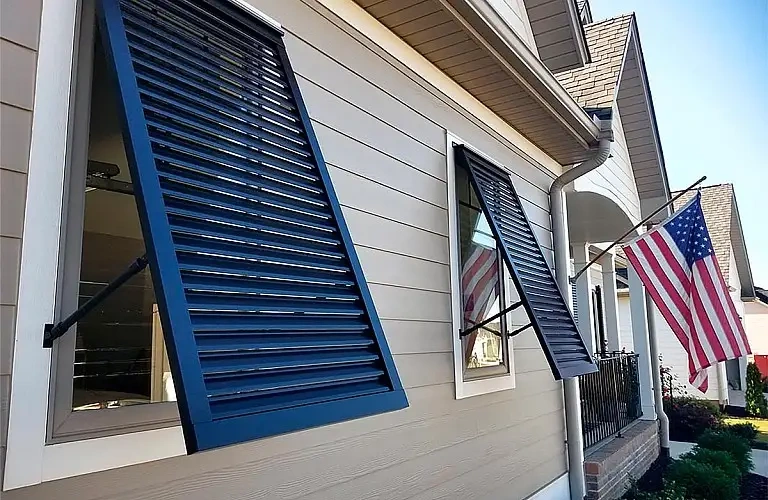
Myth: “I have impact windows, so I don’t need shutters.” Reality: Technically true for safety, but a shutter protects the glass from breaking, saving you a $2,000 replacement bill after a minor storm.
-
Myth: “All impact windows are energy efficient.” Reality: Early aluminum models were “thermal holes.”
-
Myth: “Tempered glass is the same as impact glass.” Reality: Tempered glass shatters into small cubes; impact glass uses an interlayer to hold the shards together.

Conclusion
The evolution of the best hurricane window united states market offers is a testament to the intersection of material science and environmental necessity. As we move toward a future of “resilient by design,” these windows represent the primary line of defense for the modern home.