Top Storm Window Options in America: The Definitive Pillar Guide
The selection of secondary glazing for residential and commercial structures has undergone a profound transformation as the United States navigates an era of heightened energy standards and volatile climate patterns. Far from being a relic of mid-century suburban housing, the storm window has re-emerged as a sophisticated technical solution for those seeking to enhance the thermal envelope without the structural disruption or environmental waste associated with full-unit replacement. In many American jurisdictions, particularly those with deep historical roots, the debate is no longer about whether to install a secondary layer, but which engineering approach best serves the specific physics of the existing building.
As we examine the landscape of available products, it becomes clear that “performance” is a multidimensional metric. For a homeowner in the hurricane-prone Atlantic corridor, performance is defined by impact resistance and structural integrity under high-pressure loads. For a resident of the Great Lakes region, it is defined by the mitigation of conductive heat loss and the management of interstitial condensation. Navigating the diverse array of top storm window options in America requires a departure from simplistic brand loyalty toward a more rigorous understanding of building science and regional climate demands.
Understanding “top storm window options in America.”

Identifying the top storm window options in America involves more than a cursory glance at consumer ratings. It requires an analytical perspective on the intersection of material science and local building codes. A common misunderstanding persists that all storm windows serve the same purpose: blocking drafts. While air infiltration is a primary target, modern systems are also engineered to manage the radiant and convective heat transfer that accounts for up to 30% of a home’s heating and cooling load.
The risk of oversimplification in this market is high. Consumers often equate “top” with the most expensive or the most heavily advertised national brands. However, the American storm window market remains surprisingly regional. A fabricator in New England may produce a heavy-gauge wood storm window that is functionally superior for a colonial structure than a mass-produced aluminum unit from a national distributor. Conversely, in the Southwest, the “best” option might be a solar-screening storm window that prioritizes the Solar Heat Gain Coefficient (SHGC) over traditional R-value.
To understand the market as it stands in 2026, one must look at the three primary lenses of value: preservation, performance, and price. For a landmarked property, the “top” option is the one that is invisible to the local historic commission. For a rental property in a cold climate, the “top” option is the one with the fastest ROI through energy savings. This guide treats these options not as competitors, but as specialized tools in a broader architectural toolkit.
Historical and Systemic Evolution of Secondary Glazing
The trajectory of the American storm window mirrors the nation’s shifting relationship with energy and material longevity. In the 19th century, storm windows were seasonal wooden sashes, crafted by local carpenters to be hung on exterior hooks each autumn. These were heavy, difficult to store, and required constant painting, yet they provided a massive dead-air space that effectively insulated homes for over a century.
Post-WWII industrialization brought the advent of the aluminum triple-track window. This was a revolution in convenience, allowing glass and screens to slide independently within a single frame. However, these early units were often thermal bridges, conducting cold directly into the window frame and causing significant condensation issues. They were functional but lacked the “thermal break” technology that defines modern high-end aluminum options.
The contemporary era is defined by the “Invisible” and the “Impact-Rated.” Technological leaps in low-emissivity (low-E) coatings and optical-grade acrylics have shifted the focus from the exterior to the interior. Simultaneously, the increasing frequency of severe weather events has pushed the industry to develop secondary glazing that can withstand Category 5 hurricane forces. This evolution represents a shift from a reactive weatherization tool to a proactive component of resilient architecture.
Conceptual Frameworks for Building Envelope Strategy
Evaluating these systems requires a set of mental models to categorize how they interact with the building as a whole.
1. The Stack Effect and Air Infiltration
In tall or poorly sealed buildings, the “stack effect” creates a pressure differential that pulls cold air in at the bottom and pushes warm air out at the top. The top storm window options in America address this by prioritizing perimeter sealing over the glass’s own R-value. A window with a higher R-value but a poor seal is less effective than a slightly lower-rated glass with a high-performance compression gasket.
2. The Thermal Bridge Mitigation
Metal is a good conductor of heat. In older aluminum storm windows, the frame itself becomes a path for heat to escape. The mental model for modern selection involves identifying “thermally broken” frames—those that use a non-conductive material (like resin or rubber) to separate the interior and exterior metal components.
3. The Moisture-Vapor Flow Model
Buildings “breathe.” If a storm window is too airtight on the exterior, it can trap moisture originating from the home’s interior against the wooden primary window, leading to rot. The “Safe Enclosure” model dictates that the interior layer should always be tighter than the exterior layer to ensure that any trapped moisture can migrate outward.
Key Categories and Material Divergence
Selecting from the top storm window options in America requires a comparison of the primary material archetypes available today.
| Category | Primary Material | Primary Benefit | Significant Drawback |
| Traditional Triple-Track | Aluminum | Low cost, high durability | Industrial aesthetic, thermal bridging |
| Low-E Architectural | Aluminum/Steel | High energy efficiency | Higher capital expenditure |
| Interior Compression | Acrylic/Polycarbonate | Invisibility, acoustic seal | Scratches more easily than glass |
| Custom Wood Sashes | Cedar/Pine/Sapele | Authentic preservation | High maintenance (painting) |
| Impact/Hurricane | Laminated Glass | Safety, wind resistance | Very heavy, specialized install |
| Magnetic Inserts | Optical Acrylic | DIY friendly, high seal | Limited to interior use |
Realistic Decision Logic
The decision typically follows a hierarchy of constraints. If the structure is a historic landmark, the constraint is aesthetic invisibility, which points toward interior acrylic or custom wood. If the goal is strictly utility and budget, the triple-track aluminum remains the standard. For urban environments where the primary “pollution” is noise, the mass of laminated glass or thick acrylic becomes the deciding factor.
Real-World Application Scenarios
Scenario A: The New England Colonial
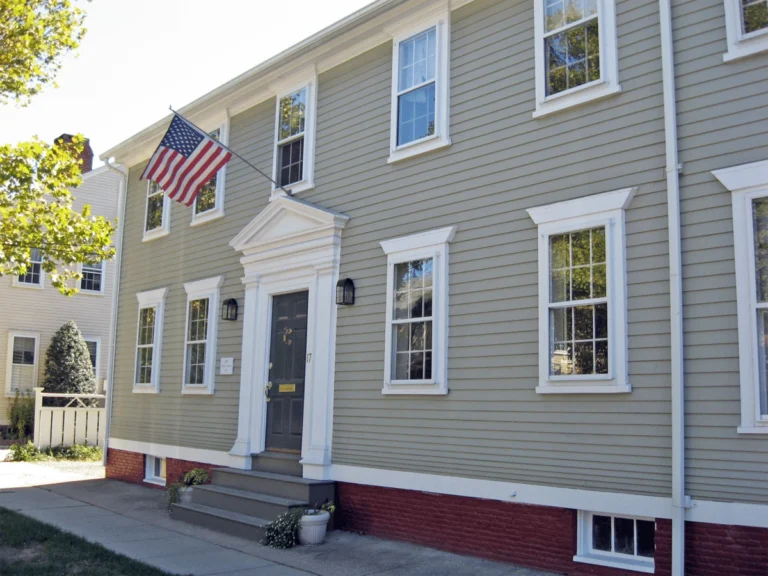
A 1780s home with original wavy-glass windows. The homeowner wants to preserve the glass but cannot afford the heating bills.
-
Selected Option: Custom exterior wood storm windows with low-E glass.
-
Result: The wood frame provides a natural thermal break, and the low-E coating reflects radiant heat into the rooms without altering the look of the historic glass.
Scenario B: The Miami Coastal Condo
A mid-century modern high-rise in a high-velocity hurricane zone.
-
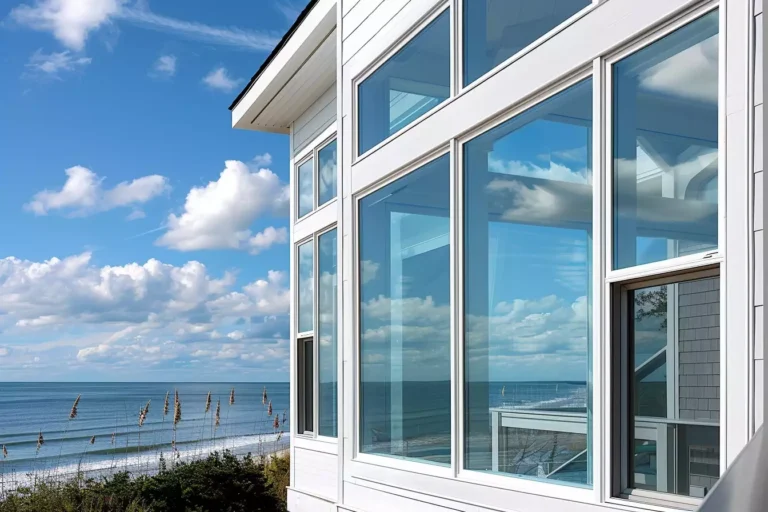
Selected Option: Exterior-mounted laminated glass storm panels with reinforced aluminum frames.
-
Constraint: Must meet Miami-Dade NOA (Notice of Acceptance) standards for impact.
Scenario C: The Manhattan Loft
A former industrial space with massive steel-framed windows. The street noise is unbearable for the resident.
-
Selected Option: Interior compression-fit acrylic inserts with a 4-inch air gap from the prime window.
-
Outcome: A reduction of up to 40 decibels, transforming the acoustic environment of the living space.
Planning, Cost, and Resource Dynamics
The economic landscape of storm windows in 2026 is influenced by material costs and the availability of federal energy tax credits.
| Window Type | Unit Cost Range | Installation Cost | Estimated Lifespan |
| Standard Aluminum | $150 – $350 | $75 – $150 | 20 – 30 Years |
| High-End Interior | $300 – $600 | $50 – $100 | 15 – 25 Years |
| Impact-Rated | $600 – $1,200 | $200 – $400 | 30+ Years |
| Custom Wood | $500 – $1,500 | $150 – $300 | 50+ Years |
Direct vs. Indirect Costs
The “price” of a window is not merely the invoice. An indirect cost of choosing a low-quality storm window is the potential for moisture damage to the primary window sash. Conversely, the “opportunity cost” of not installing storm windows includes the continued wear on the HVAC system and the loss of interior comfort, which can be quantified in lower property resale values.
Tools, Strategies, and Support Systems
Implementing a high-performance storm window strategy requires more than just the units themselves.
-
Laser Measuring: For custom inserts, a margin of error of 1/16th of an inch can ruin the air seal.
-
Thermal Imaging: Using FLIR cameras to identify specific areas of air leakage before and after installation.
-
Blower Door Testing: Quantifying the reduction in air changes per hour (ACH) to prove the effectiveness of the installation.
-
Low-E Detectors: Magnetic sensors used to ensure the reflective coating is on the correct surface (Surface #2 or #3).
-
Acoustic Sealants: Specialized non-hardening caulks used at the perimeter of the storm frame.
-
Desiccant Strips: Hidden silica packets used in the gap to manage initial humidity during the first seasonal transition.
Risk Landscape and Failure Modes
The primary risk in the storm window sector is Systemic Trapped Moisture. If an exterior storm window is perfectly sealed without “weep holes,” condensation will collect on the wooden sill. Over time, this results in fungal growth and structural rot that is often invisible from the street.
A secondary risk is Thermal Stress Cracking. If a storm window is placed over a dark-colored prime window in a high-solar-gain environment (like the American Southwest), the temperature in the gap can exceed 150°F. This heat can cause the glass to expand unevenly and shatter. The mitigation strategy involves ensuring proper venting or using heat-strengthened glass.
Governance, Maintenance, and Long-Term Adaptation
A storm window is a long-term asset that requires a structured maintenance cycle to ensure it continues to meet performance standards.
-
Quarterly Review: Inspect weep holes for debris or insect nests (mud daubers are a common cause of drainage failure).
-
Annual Review: Check the integrity of the weatherstripping. Felt or foam gaskets can compress over time, losing their seal.
-
5-Year Cycle: For wood-framed storms, check the paint and putty. For aluminum, lubricate the tracks with silicone-based spray.
-
Adjustment Triggers: If condensation appears on the inside of the storm window (the side facing the house), it indicates the prime window is leaking moist air and needs recaulking.
Measurement, Tracking, and Evaluation
How does one verify that they have successfully implemented the top storm window options in America for their specific context?
-
Leading Indicators: Surface temperature of the interior glass (should be closer to room temperature than outside temperature); absence of “curtain flutter” during wind events.
-
Lagging Indicators: A 10–15% reduction in year-over-year energy consumption (adjusted for degree-days).
-
Qualitative Signals: Improved sleep due to noise reduction; ability to sit near windows during winter months without feeling a “draft.”
Common Misconceptions and Oversimplifications
-
“New windows are always better than storms.” False. A high-quality storm window over an original wood sash often provides better U-values than a mid-range replacement window.
-
“Storm windows are only for winter.” In reality, they are essential for keeping cool air inside during the summer and reflecting solar heat.
-
“Plastic is inferior to glass.” Modern optical-grade acrylic has better insulating properties than glass, though it requires specialized cleaning products.
-
“Condensation is a window problem.” Condensation is usually a humidity and air-flow problem. The storm window simply makes the symptom visible.
-
“Triple-track windows look ugly.” Modern “low-profile” designs use mitered corners and architectural colors to blend into the frame.
-
“They are too expensive.” When factoring in tax credits and the cost of replacing siding/trim for new windows, storm windows are often the most economical choice.
Ethical and Practical Considerations
In the context of the American housing stock, there is an ethical argument for the storm window as a tool for carbon sequestration. Original wood windows were often made from old-growth timber that is significantly more durable than modern wood. Tossing these into a landfill to install vinyl windows with a 15-year lifespan is a net loss for the environment. The storm window allows for the retention of historic materials while achieving modern performance.
Conclusion
The evolution of the top storm window options in America reflects a broader shift toward intelligent, non-destructive home improvement. Whether the goal is to survive a hurricane, silence a city street, or lower a heating bill, the secondary glazing market in 2026 offers a range of solutions that respect the existing architecture while providing 21st-century comfort. The key to success lies in matching the material and engineering to the specific thermal and structural needs of the building. In an era of increasing environmental awareness, the most sustainable window is often the one you already have—properly protected by a high-performance secondary layer.